When I was browsing the internet, I had tried many combinations of "effects of being alone" and I had not once thought of solitary confinement.
There are many 'Creepy Pastas' online that talk about sensory deprivation and experiments that have been conducted. I wanted to look at the extremes. So, after a fair bit of digging I found a morbidly interesting experiment that shed some light on Bertha Mason's potential mental state.
This story begins on June 1, 1951 at a secret meeting in the Ritz Carlton Hotel on Sherbrooke. The purpose of the meeting was to launch a joint American-British-Canadian effort led by the CIA to fund studies on sensory deprivation. In attendance was Dr. Donald Hebb, then director of psychology at McGill University, who received a grant of $10,000 to study sensory deprivation. It would be fifteen years after this meeting at the Ritz that Cameron would disastrously pick up where Hebb left off.
Dr. Hebb paid a group of his own psychology students to remain isolated in a room, deprived of all senses, for an entire day. In an attempt to determine a link between sensory deprivation and the vulnerability of cognitive ability, Hebb also played recordings of voices expressing creationist or generally anti-scientific sentiments – clearly, ideas psychology students would oppose. However, the prolonged period of sensory deprivation made the students overly susceptible to sensory stimulation. Students suddenly became very tolerant of the ideas that they had readily dismissed before. As a history professor at the University of Wisconsin – Madison, Alfred McCoy described in his book, A Question of Torture, that during Hebb’s own experiments “the subject’s very identity had begun to disintegrate.” One can only fathom the cognitive effects of Hebb’s work.
Yet, Hebb was more Dr. Jekyll than Mr. Hyde. According to McCoy’s research, Hebb was described as a gifted man whose ingenuity revolutionized psychology as a science; in fact, seven years after the publication of this research, McGill University and the American Psychological Association nominated him for a Nobel Prize.
Unknowingly, Hebb reached conclusions that would set the agenda for CIA investigation on emerging techniques of psychological torture and interrogation. Five years later, Dr. Donald Ewen Cameron, this story’s Mr. Hyde, entered, with an unstoppable will to finish what Hebb had started. When Cameron started his research, he was the head of the Allan Memorial, which at the time was McGill’s psychiatric treatment facility. Although they were separate legal entities, the Royal Victoria Hospital and McGill were unequivocally bound through their medical professionals. Cameron received a salary from McGill but was medically responsible to the hospital. Besides his work on campus, he was a world-renowned professor and a leading figure in the psychological sciences, serving as president of multiple psychiatric associations. It was determination and ambition that made Cameron a world-renowned psychiatrist. During his most controversial experiments, he strove to break barriers in the understanding of mental illness, but at the expense of his patients’ well-being. In a report to the Canadian government in the mid 1980s, sources reveal that Cameron was “ruthless, determined, aggressive, and domineering … He seemed not to have the ability to deeply empathize with their [patients] problems or their situation.” When the whistle blew on Allan Memorial, Cameron’s stern portrait turned into the evil stare of a “mad scientist,” as media reports explained the nature of his research.
MK-ULTRA Subproject 68 Cameron’s research was based on the ideas of “re-patterning” and “re-mothering” the human mind. He believed that mental illness was a consequence of an individual having learned “incorrect” ways of responding to the world. These “learned responses” created “brain pathways” that led to repetitive abnormal behaviour. Dr. Cameron wanted to de-pattern patients’ minds with the application of highly disruptive electroshock twice a day, as opposed to the norm of three times a week. According to him, this would break all incorrect brain pathways, thus de-patterning the mind. Some call it brainwashing; Cameron called it re-patterning. He held the view that mental illness was also a result of poor mothering. Thus the de-patterning processes rendered the patient’s mind in a child-like state and through re-patterning the patient could be “re-mothered.” With this framework in mind, Dr. Cameron set out to prove his theory using questionable methods on unwitting patients. Step 1: To prepare them for the de-patterning treatment, patients would be put into a state of prolonged sleep for about ten days using various drugs, after which they experienced an invasive electroshock therapy that lasted for about 15 days. But patients were not always prepared for re-patterning and sometimes Cameron used extreme forms of sensory deprivation as well. Cameron described the experience: “there is not only a loss of the space-time image but a loss of all feeling that should be present…in more advanced forms [the patient] may be unable to walk without support, to feed himself, and he may show double incontinence.” Step 2: Following the preparation period and the de-patterning came the process of “psychic driving” or re-patterning, in which Cameron would play messages on tape recorders to his patients. He alternated negative messages about the patients’ lives and personalities with positive ones; these messages could be repeated up to half a million times.
Kubark, or how the CIA learned to torture The experiments done at McGill were part of the larger MK-ULTRA project led by Sidney Gottlieb of the CIA. In 1963, the year in which MK-ULTRA ended, the CIA compiled all the research into a torture manual called the Kubark Counterintelligence Interrogation Handbook. Yes, a “torture manual” that would eventually define the agency’s interrogation methods and training programs throughout the developing world. The Kubark, which is nowadays readily available, cites the experiments conducted at McGill as one of the main sources of its techniques for sensory deprivation. The document presents some eerie conclusions. An excerpt from the instructions to CIA interrogators reads, “Results produced only after weeks or months of imprisonment in an ordinary cell can be duplicated in hours or days in a cell which has no light, which is sound-proofed, in which odors are eliminated, et cetera,” In essence, the psychological paradigm taken by the CIA would not have been possible without Hebb and Cameron’s research on sensory deprivation and psychic driving. With names like MK-ULTRA and Kubark, these experiments sound like they are out of Anthony Burgess’s A Clockwork Orange. Hebb and Cameron’s work feel so far removed from modern North American life. However, there is strong indication these methods have been used in the United States of America. Following 9/11, the war on terror and the generalized fearmongering that ensued, the Bush administration changed the rules of the game out of concern for homeland security. Then-U.S. Secretary of Defense Donald Rumsfeld approved special practices that included the “use of isolation facility for up to thirty days.” All of a sudden, the U.S. allowed the use of torture methods developed just up University.
Lawsuits Only decades later, in the 1980s, did past victims speak about their experiences, and by the nineties, the lawsuits began to pile up. In response, the Canadian government launched “The Allan Memorial Institute Depatterned Persons Assistance Plan,” which provided $100,000 to each of the former patients of Dr. Ewen Cameron. The compensation came from a recommendation by lawyer George Cooper, in which he clarified that the Canadian government did not have a legal responsibility for what happened, but a moral responsibility. A week ago, I met with Alan Stein, a Montreal lawyer who has handled some of the most notable cases of Dr. Cameron’s patients against the Allan Memorial and the Canadian government. Stein is an affable and zealous man whose passion for the practice of law became evident after few minutes of meeting him. Sitting at a big table, in what perhaps was the office boardroom, Stein showed me his signed copy of prominent Canadian author Naomi Klein’sThe Shock Doctrine. On the cover she had scribbled, “To the lawyer who had the guts to take on the shock doctors and win.” Stein’s cases have set important precedents for former patients of Dr. Cameron trying to receive compensation. He has been one of the most important figures in offering Cameron’s victims some peace of mind. To this day, Stein receives calls and emails from people seeking compensation. Curiously enough, Stein is also a man in full dedication to his work, in the same vein as Hebb and Cameron but with different results. As he recited by memory the many MK-ULTRA cases he has handled and talked about each of them as if they were still happening, I came to notice a connection between these three men. Hebb, Cameron, and Stein, in their respective eras, had the same relentless determination to their occupation. However, what set them apart so vastly was their morals and in a sense, their ability (or inability) to empathize with other individuals.
Legacy for McGill University When the news broke of the true nature of Cameron’s research, McGill University and Allan Memorial were the names on everyone’s lips. A respected educational and research institution had hosted some truly macabre events and shaped the course of torture methods for many years to come. As Abraham Fuks, Research Integrity Officer and former Dean of the Faculty of Medicine, explained to me in an email, the ethical framework for research has undergone vast changes in the past half a century. Since the seventies and early eighties, Canada and McGill have a regulatory framework for the ethical conduct of research with various mechanisms to ensure its implementation. New rules, stricter journals, and peer reviews are set to uphold medical standards. Cameron’s research at the Allan Memorial could not be possibly carried out today. With hindsight, it is easy to condemn Cameron, Hebb, and possibly every person associated with the MK-ULTRA project. Although some of these men deserve condemnation, it is important to recognize our own privileged position: A position with more information and a different set of values in which judging the past almost happens by default. But the legacy lives on, and what Cameron did fifty years ago will always be part of our collective consciousness and identity. Unmistakably, reviewing dark stages of our history exposes the volatility and fragility of the research conducted not only at McGill, but at all universities. This story highlights the importance of criticism on all types of research done at this institution, be it military, pharmaceutical, or medical: every piece of research will impact lives and perhaps change the course of humanity. It’s likely that 50 years from now, a bigheaded student journalist with the gift of hindsight will denounce a McGill research project that is currently underway. On that day, we will be accountable for letting it happen.(Features and Velasquez-Buritica 2012) A Tale of Two Doctors
Now, while Bertha Mason wasn't exposed to anything like this. Her living conditions are a very mild form of isolation. She wouldn't have been exposed to the sense deprivation, but the lack of social interaction and being locked away obviously had a catatonic result on her mental state.
What we know about Bertha Mason's Living Conditions:
Locked away on the top floor of Thornfield.
Charged to one of the maids who wasn't a doctor.
No contact with the outside world
No visits from family members
What we've seen/can assume that Bertha Mason exhibit
Pyromaniac tendencies
Insomnia
Animal like behaviours
Vitamin D malnutrition
Unkept appearance
Potential self multilation
Another absolutely fascinating article is here. It's really long though. It shows a modern insight into the effects of isolation
Sarah Shourd’s mind began to slip after about two months into her incarceration. She heard phantom footsteps and flashing lights, and spent most of her day crouched on all fours, listening through a gap in the door.
That summer, the 32-year-old had been hiking with two friends in the mountains of Iraqi Kurdistan when they were arrested by Iranian troops after straying onto the border with Iran. Accused of spying, they were kept in solitary confinement in Evin prison in Tehran, each in their own tiny cell. She endured almost 10,000 hours with little human contact before she was freed. One of the most disturbing effects was the hallucinations.
“In the periphery of my vision, I began to see flashing lights, only to jerk my head around to find that nothing was there,” shewrote in the New York Times in 2011. “At one point, I heard someone screaming, and it wasn’t until I felt the hands of one of the friendlier guards on my face, trying to revive me, that I realised the screams were my own.”
We all want to be alone from time to time, to escape the demands of our colleagues or the hassle of crowds. But notalone alone. For most people, prolonged social isolation is all bad, particularly mentally. We know this not only from reports by people like Shourd who have experienced it first-hand, but also from psychological experiments on the effects of isolation and sensory deprivation, some of which had to be called off due to the extreme and bizarre reactions of those involved. Why does the mind unravel so spectacularly when we’re truly on our own, and is there any way to stop it?
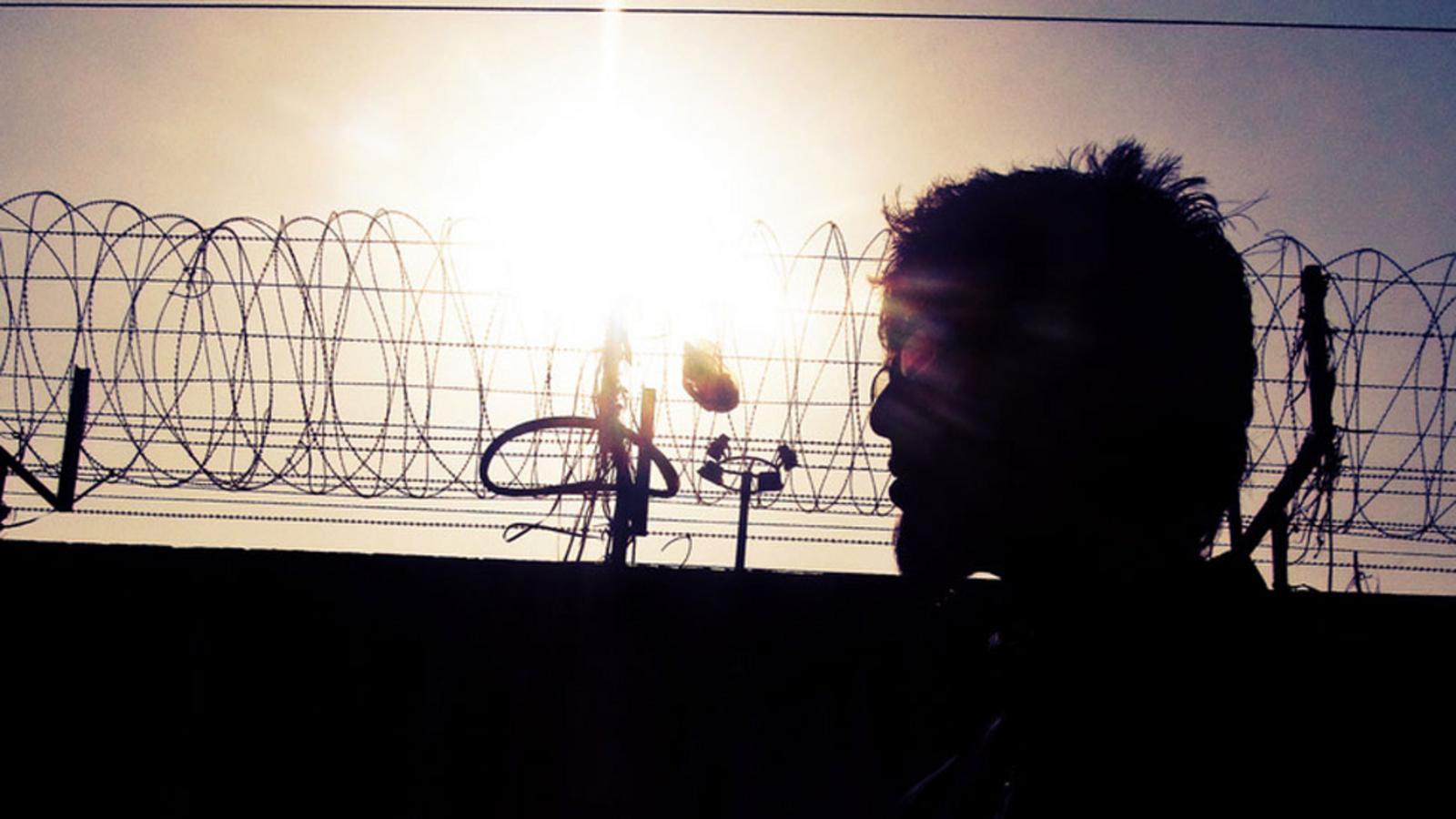
Inside prison walls, solitude can play disturbing tricks on the mind (Flickr/Cyri)
We’ve known for a while that isolation is physically bad for us. Chronically lonely people have higher blood pressure, are more vulnerable to infection, and are also more likely to develop Alzheimer’s disease and dementia. Loneliness also interferes with a whole range of everyday functioning, such as sleep patterns, attention and logical and verbal reasoning. The mechanisms behind these effects are still unclear, though what is known is that social isolation unleashes an extreme immune response – a cascade of stress hormones and inflammation. This may have been appropriate in our early ancestors, when being isolated from the group carried big physical risks, but for us the outcome is mostly harmful.
Yet some of the most profound effects of loneliness are on the mind. For starters, isolation messes with our sense of time. One of the strangest effects is the ‘time-shifting’ reported by those who have spent long periods living underground without daylight. In 1961, French geologist Michel Siffre led a two-week expedition to study an underground glacier beneath the French Alps and ended up staying two months, fascinated by how the darkness affected human biology. He decided to abandon his watch and “live like an animal”. While conducting tests with his team on the surface, they discovered it took him five minutes to count to what he thought was 120 seconds. A similar pattern of ‘slowing time’ was reported by Maurizio Montalbini, a sociologist and caving enthusiast. In 1993, Montalbini spent 366 days in an underground cavern near Pesaro in Italy that had been designed with Nasa to simulate space missions, breaking his own world record for time spent underground. When he emerged, he was convinced only 219 days had passed. His sleep-wake cycles had almost doubled in length. Since then, researchers have found that in darkness most people eventually adjust to a 48-hour cycle: 36 hours of activity followed by 12 hours of sleep. The reasons are still unclear.
After emerging from a nine week stint in underground darkness, Michel Siffre needed to wear a blindfold to protect his eyes (Getty Images)
As well as their time-shifts, Siffre and Montalbini reported periods of mental instability too. But these experiences were nothing compared with the extreme reactions seen in notorious sensory deprivation experiments in the mid-20th Century.
In the 1950s and 1960s, China was rumoured to be using solitary confinement to “brainwash” American prisoners captured during the Korean War, and the US and Canadian governments were all too keen to try it out. Their defence departments funded a series of research programmes that might be considered ethically dubious today.
The most extensive took place at McGill University Medical Center in Montreal, led by the psychologist Donald Hebb. The McGill researchers invited paid volunteers – mainly college students – to spend days or weeks by themselves in sound-proof cubicles, deprived of meaningful human contact. Their aim was to reduce perceptual stimulation to a minimum, to see how their subjects would behave when almost nothing was happening. They minimised what they could feel, see, hear and touch, fitting them with translucent visors, cotton gloves and cardboard cuffs extending beyond the fingertips. As Scientific American magazine reported at the time, they had them lie on U-shaped foam pillows to restrict noise, and set up a continuous hum of air-conditioning units to mask small sounds.
After only a few hours, the students became acutely restless. They started to crave stimulation, talking, singing or reciting poetry to themselves to break the monotony. Later, many of them became anxious or highly emotional. Their mental performance suffered too, struggling with arithmetic and word association tests.
Sensory deprivation can cause hallucinations - sometimes starting with geometric shapes or points of light, and then getting stranger... (Akuei/Flickr)
But the most alarming effects were the hallucinations. They would start with points of light, lines or shapes, eventually evolving into bizarre scenes, such as squirrels marching with sacks over their shoulders or processions of eyeglasses filing down a street. They had no control over what they saw: one man saw only dogs; another, babies.
Some of them experienced sound hallucinations as well: a music box or a choir, for instance. Others imagined sensations of touch: one man had the sense he had been hit in the arm by pellets fired from guns. Another, reaching out to touch a doorknob, felt an electric shock.
When they emerged from the experiment they found it hard to shake this altered sense of reality, convinced that the whole room was in motion, or that objects were constantly changing shape and size.
Distressing end
The researchers had hoped to observe their subjects over several weeks, but the trial was cut short because they became too distressed to carry on. Few lasted beyond two days, and none as long as a week. Afterwards, Hebb wrote in the journal American Psychologist that the results were “very unsettling to us… It is one thing to hear that the Chinese are brainwashing their prisoners on the other side of the world; it is another to find, in your own laboratory, that merely taking away the usual sights, sounds, and bodily contacts from a healthy university student for a few days can shake him, right down to the base.”
In 2008, clinical psychologist Ian Robbins recreated Hebb’s experiment in collaboration with the BBC, isolating six volunteers for 48 hours in sound-proofed rooms in a former nuclear bunker. The results were similar. The volunteers suffered anxiety, extreme emotions, paranoia and significant deterioration in their mental functioning. They also hallucinated: a heap of 5,000 empty oyster shells; a snake; zebras; tiny cars; the room taking off; mosquitoes; fighter planes buzzing around.
Why does the perceptually deprived brain play such tricks? Cognitive psychologists believe that the part of the brain that deals with ongoing tasks, such as sensory perception, is accustomed to dealing with a large quantity of information, such as visual, auditory and other environmental cues. But when there is a dearth of information, says Robbins, “the various nerve systems feeding in to the brain’s central processor are still firing off, but in a way that doesn’t make sense. So after a while the brain starts to make sense of them, to make them into a pattern.” It creates whole images out of partial ones. In other words, it tries to construct a reality from the scant signals available to it, yet it ends up building a fantasy world.
Such mental failures should perhaps not surprise us. For one thing, we know that other primates do not fare well in isolation. One of the most graphic examples is psychologist Harry Harlow’s experiments on rhesus macaque monkeys at the University of Wisconsin-Madison during the 1960s, in which he deprived them of social contact after birth for months or years. They became, he observed, “enormously disturbed” even after 30 days, and after a year were “obliterated” socially, incapable of interaction of any kind. (A comparable social fracturing has been observed in humans: consider the children rescued from Romanian orphanages in the early 1990s, who after being almost entirely deprived of close social contact since birth grew up with serious behavioural and attachment issues.)
We may crave solitude occasionally, but in the long term it's not good for us physically or mentally (Getty Images)
Secondly, we derive meaning from our emotional states largely through contact with others. Biologists believe that human emotions evolved because they aided co-operation among our early ancestors who benefited from living in groups. Their primary function is social. With no one to mediate our feelings of fear, anger, anxiety and sadness and help us determine their appropriateness, before long they deliver us a distorted sense of self, a perceptual fracturing or a profound irrationality. It seems that left too much to ourselves, the very system that regulates our social living can overwhelm us.
Take the 25,000 inmates held in “super-maximum security” prisons in the US today. Without social interaction, supermax prisoners have no way to test the appropriateness of their emotions or their fantastical thinking, says Terry Kupers, a forensic psychiatrist at the Wright Institute in Berkeley, California, who has interviewed thousands of supermax prisoners. This is one of the reasons many suffer anxiety, paranoia and obsessive thoughts. Craig Haney, a psychologist at the University of California, Santa Cruz, and a leading authority on the mental health of inmates in the US, believes that some of them purposefully initiate brutal confrontations with prison staff just to reaffirm their own existence – to remember who they are.
Coping strategy
Social isolation is not always debilitating, however. Are some better than others at coping? And can you train yourself to resist the worst effects? Here scientists have fewer hard answers, but we can at least look to the lessons of individuals who thrived – or floundered – under isolation.
When Shourd was imprisoned in Iran, she was arguably among the least-equipped people to cope, because her incarceration came out of the blue. People in her circumstances have their world suddenly inverted, and there is nothing in the manner of their taking – no narrative of sacrifice, or enduring for a greater good – to help them derive meaning from it. They must somehow find meaning in their predicament – or mentally detach themselves from their day-to-day reality, which is a monumental task when alone.
Hussain Al-Shahristani managed it. He was Saddam Hussein’s chief nuclear adviser before he was tortured and shut away in Abu Ghraib prison near Baghdad after refusing on moral grounds to cooperate on the development of an atomic weapon. He kept his sanity during 10 years of solitary confinement by taking refuge in a world of abstractions, making up mathematical problems which he then tried to solve. He is now deputy energy minister of Iraq. Edith Bone, a medical academic and translator, followed a similar strategy during the seven years she spent imprisoned by the Hungarian communist government after World War Two, constructing an abacus out of stale bread and counting out an inventory of her vocabulary in the six languages she spoke fluently.
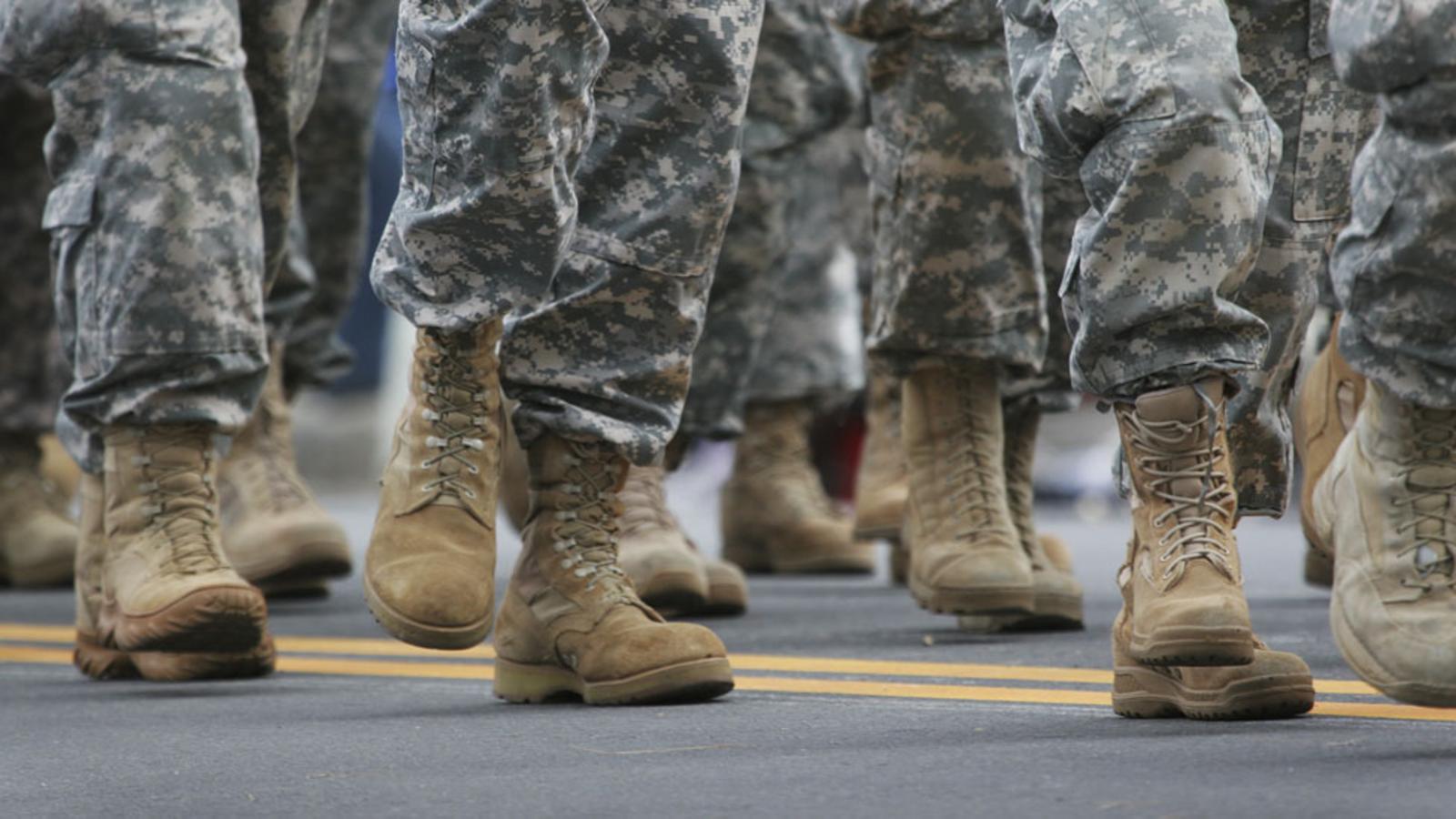
Some believe a military background may help prevent the worst effects of isolation (Thinkstock)
Such experiences may be easier to take if you belong to a military organisation. Keron Fletcher, a consultant psychiatrist who has helped debrief and treat hostages, says mock detention and interrogation exercises of the kind he himself underwent while serving with the Royal Air Force are a good preparation for the shock of capture. “They teach you the basics of coping,” he says. “Also, you know your buddies will be busting a gut to get you back in one piece. I think the military are less likely to feel helpless or hopeless. Hopelessness and helplessness are horrible things to live with and they erode morale and coping ability.”
US senator John McCain is a good example of how a military mindset bestows psychological advantages. His five-and-a-half years as a prisoner of war in Vietnam, during which he refused to yield to his interrogators, actually seemed to strengthen him. Though note what he had to say about the two years he spent in isolation: “It’s an awful thing, solitary. It crushes your spirit and weakens your resistance more effectively than any other form of mistreatment… The onset of despair is immediate, and it is a formidable foe.”
Extreme reality
Psychologists who study how people cope with isolation have learnt much from solo explorers and mountaineers. For many adventurers deprived of human company – albeit voluntarily – the landscape itself can serve as an effective surrogate, drawing them out of themselves into the beauty or grandeur of their surroundings. Norwegian psychologist Gro Sandal at the University of Bergen in Norway, who has interviewed many adventurers about how they cope in extreme environments, says that transcending the reality of their situation in this way is a common coping mechanism. “It makes them feel safer. It makes them feel less alone.”
A similar psychological mechanism could explain why shipwrecked mariners marooned on islands have been known to anthropomorphise inanimate objects, in some cases creating a cabal of imaginary companions with whom to share the solitude. It sounds like madness but is likely a foil against it. Take the way sailor Ellen MacArthur nicknamed her trimaran “Mobi”, during her record-breaking solo circumnavigation of the globe in 2005. During the voyage she signed emails to her support team “love e and mobi”, and in her published account uses “we” rather than “I”.
Sailors have been known to combat the loneliness of the ocean by anthropomorphising inanimate objects (Thinkstock)
There is no more poignant illustration of the power of solitude to sink one person while lifting up another than the stories of Bernard Moitessier and Donald Crowhurst, two of the competitors in the 1968 Sunday Times Golden Globe round-the-world yacht race. The trophy, offered to the first sailor to complete a solo non-stop circumnavigation of the globe, was won in 313 days by Robin Knox-Johnston, the only one out of nine starters to finish. He seemed to relish being alone with his boat, but not as much as Moitessier, an ascetic Frenchman who practised yoga on deck and fed cheese to the shearwater birds that shadowed him. Moitessier found the experience so fulfilling, and the idea of returning to civilisation so distasteful, that he abandoned the race despite a good chance of victory and just kept on sailing, eventually landing in Tahiti after travelling more than halfway round the world again. “I continue non-stop because I am happy at sea,” he declared, “and perhaps because I want to save my soul.”
Crowhurst, meanwhile, was in trouble from the start. He left England ill-prepared and sent fake reports about his supposed progress through the southern seas while never actually leaving the Atlantic. Drifting aimlessly for months off the coast of South America, he became increasingly depressed and lonely, eventually retreating to his cabin and consolidating his fantasies in a rambling 25,000-word philosophical treatise before jumping overboard. His body was never found.
What message can we take from these stories of endurance and despair? The obvious one is that we are, as a rule, considerably diminished when disengaged from others. Isolation may very often be the “sum total of wretchedness”, as the writer Thomas Carlyle put it. However, a more upbeat assessment seems equally valid: it is possible to connect, to find solace beyond ourselves, even when we are alone. It helps to be prepared, and to be mentally resilient. But we shouldn’t underestimate the power of our imagination to knock over prison walls, penetrate icy caves or provide make-believe companions to walk with us.(BBC and Bond 2014)
I think I've got a lot to take in and account for when making this medically accurate make up.I'm pretty excited but I've fallen down a research rabbit hole and I'm trying to get out of it and carry on with this Blogging quest that I've got. I found it really interesting about the articles approach to sailors and their attempts to prevent isolation.
Morbi leo risus, porta ac consectetur ac, vestibulum at eros. Fusce dapibus, tellus ac cursus commodo, tortor mauris condimentum nibh, ut fermentum massa justo sit amet risus.